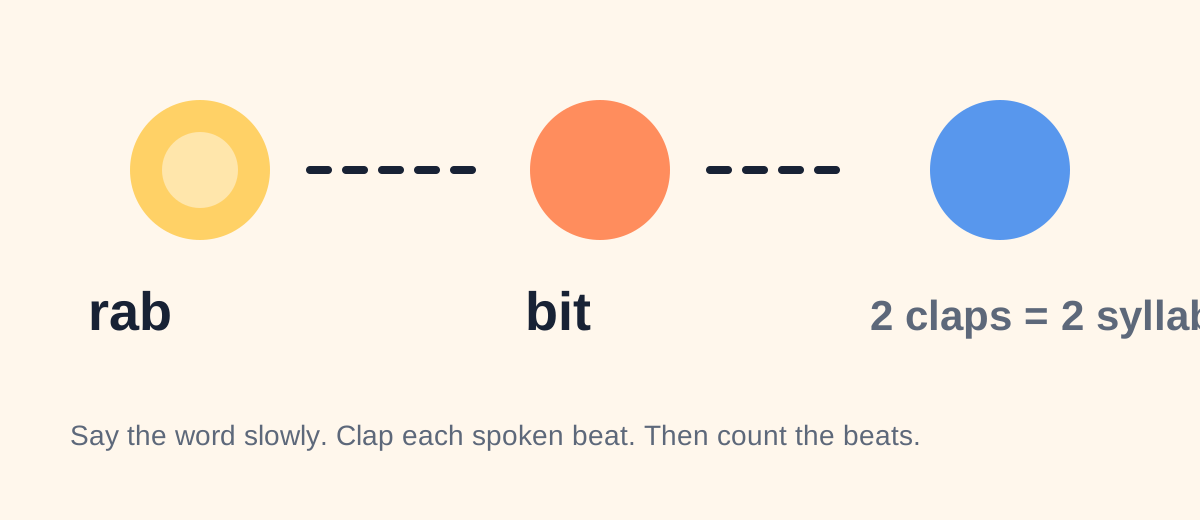
A syllable is a unit of pronunciation that contains one vowel sound, often surrounded by consonants. Every word is made up of one or more of these “sound chunks.” For example, cat has one syllable, while rabbit has two: rab-bit. Understanding syllables helps children break unfamiliar words into manageable parts, which is a core skill for decoding, spelling, and reading longer words with confidence.
An important thing to remember is that word length does not always predict syllable count. The word straight has only one syllable despite being long, while a short word like over has two. That is why syllable practice should focus on what children hear, not how many letters they see.
Why Syllable Awareness Matters for Reading
Syllable awareness is a key building block of phonological awareness: the ability to hear and work with sounds in spoken language. Kids who can confidently break words into syllables often decode multisyllabic words more accurately and read with better fluency. Instead of seeing a long word as one big problem, they learn to divide it into smaller spoken parts.
This skill usually develops before children move on to blending individual letter sounds within each syllable. Later, structured phonics instruction connects these spoken chunks to printed patterns, spelling choices, and decoding strategies. That is why syllable games are useful at home, and why a strong phonics app or reading program should connect syllable awareness to blending, decoding, and spelling practice.
How to Teach Syllables: The Clap Method
The most common and effective way to teach syllable counting is the Clap Method. It is simple, physical, and easy for young children to understand.
- Say the word slowly and clearly out loud.
- Clap once for each syllable you hear, not once for each letter.
- Count the claps together with your child.
- Repeat with a new word.
Example: say banana and clap three times: ba clap, na clap, na clap. You can also try stomping, tapping a drum, placing a hand under the chin to feel the jaw drop, or using “robot talk,” where each syllable is said in a slow robotic voice.
The Six Syllable Types for Older Kids
Once children are comfortable counting syllables, they can begin learning common syllable types. These patterns help with pronunciation and spelling of longer words.
| Syllable type | How it works | Examples |
|---|---|---|
| Closed syllable | Ends in a consonant; the vowel usually makes a short sound. | cat, nap-kin, muf-fin |
| Open syllable | Ends in a vowel; the vowel often makes a long sound. | hi, go, ti-ger |
| Vowel-consonant-e | Silent e helps the vowel say its long sound. | cake, note, cute |
| Vowel team | Two vowels work together to make one sound. | rain, boat, cloud |
| R-controlled | A vowel followed by r changes the vowel sound. | car, bird, corn |
| Consonant-le | Usually found at the end of words. | lit-tle, bub-ble, ta-ble |
Do not expect a young child to master all six types at once. Use them as a gradual guide. For a beginning reader, hearing and counting beats is enough. For an older reader, syllable types become a tool for reading and spelling bigger words.
Syllable Division Rules for Reading Longer Words
When a child meets a word they do not recognize, syllable division rules can help them break it apart before blending it back together.
- Underline every vowel in the word first.
- If two consonants sit between two vowels, divide between the consonants: rab-bit, nap-kin.
- If one consonant sits between two vowels, it often moves with the second syllable: ti-ger, ro-bot.
- Check the result: the divided word should still sound like a real, familiar word once blended together.
These rules are helpful, but English has exceptions. Teach them as flexible problem-solving tools, not as rigid rules that work every time.
30+ Example Words Sorted by Syllable Count
| 1 syllable | 2 syllables | 3 syllables | 4+ syllables |
|---|---|---|---|
| cat | rabbit | banana | caterpillar |
| dog | tiger | elephant | watermelon |
| sun | napkin | dinosaur | information |
| jump | pencil | butterfly | television |
| tree | little | vegetable | alligator |
| book | table | umbrella | hippopotamus |
| straight | apple | tomato | refrigerator |
| clap | bubble | family | comfortable |
Syllables vs Rhyming vs Letter Sounds
Syllables are beats in spoken words. Rhyming is when words share the same ending sound, such as cat, hat, and bat. Letter sounds are the sounds connected to printed letters or spelling patterns, such as /m/ for the letter m.
These skills are related, but they are not the same. A child may be able to rhyme but still struggle to count syllables. Another child may know many letter sounds but need practice hearing bigger word parts. Strong early reading practice develops all three: hearing beats, hearing sound patterns, and connecting sounds to print.
Simple Syllable Games to Play at Home
Learning sticks better through play. Try these low-prep activities during normal family routines.
- Syllable scavenger hunt: walk around the house naming objects and clapping their syllables.
- Name tapping: tap out syllables in family members’ or pets’ names.
- Syllable sorting: write words on cards and sort them into piles by syllable count.
- Jaw-drop counting: place a hand under the chin and count how many times it drops while saying a word.
- Robot talk: say each word part in a robot voice, then blend the parts back together.
How Long Should Practice Sessions Be?
For young children, short and frequent practice works best. Ten to fifteen minutes most days is usually more effective than one long weekly session. Stop before frustration builds, and revisit tricky words often rather than moving on too quickly. For preschoolers, even two or three playful minutes can be enough.
Combine Syllable Practice With a Structured Phonics App
Clapping games build awareness, but kids also benefit from a clear, sequential program that connects syllables to blending, decoding, and spelling. If you are looking for a structured way to build on this skill, see our comparison of the best phonics apps for kids. It covers options for beginning readers, structured phonics practice, and children who need extra multisensory support.
The best approach is balanced: use quick oral games to build listening skills, read real books together, and choose structured practice when your child is ready to connect spoken syllables with printed words.